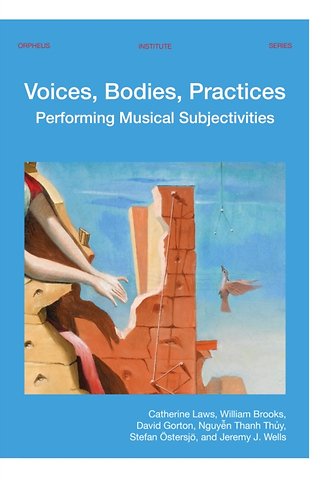
Voices, Bodies, Practices
Performing Musical Subjectivities
Samenvatting
Identity and subjectivity in musical performances.
Who is the "I" that performs? The arts of the twentieth and twenty-first centuries have pushed us relentlessly to reconsider our notions of the self, expression, and communication: to ask ourselves, again and again, who we think we are and how we can speak meaningfully to one another. Although in other performing arts studies, especially of theatre, the performance of selfhood and identity continues to be a matter of lively debate in both practice and theory, the question of how a sense of self is manifested through musical performance has been neglected. The authors of Voices, Bodies, Practices are all musician-researchers: the book employs artistic research to explore how embodied performing "voices" can emerge from the interactions of individual performers and composers, musical materials, instruments, mediating technologies, and performance contexts.
Specificaties
Inhoudsopgave
Contents of the Online Repository of Supplemental Files
Introduction
Catherine Laws
Chapter 1
Austerity Measures I: Performing the Discursive Voice
David Gorton and Stefan Östersjö
Part 1: Collaboration and the discursive voice
Part 2: Analysing the discursive voice in performance
Conclusions
Chapter 2
Being a Player: Agency and Subjectivity in Player Piano
Catherine Laws
Part 1: Player Piano and Saying “I”
Part 2: The Embodied Subject in Player Piano
Part 3: Instrument as Agent
Part 4: From Instrument to Ecology
Postlude: “Alone With My Ten Fingers”?
Chapter 3
Footnotes
William Brooks, Stefan Östersjö, and Jeremy J. Wells
Part 1
Part 2
Part 3
Chapter 4
Arrival Cities: Hanoi
Nguyễn Thanh Thủy and Stefan Östersjö
Arrival Cities: Hanoi
1. Introduction
2. Modes of collaboration
3. Documentary, empathy, and inter-subjectivity
4. The making of Arrival Cities: Hanoi
5. The discursive voice in intercultural collaboration
Conclusion
Catherine Laws
References
Notes on Contributors
Index