,

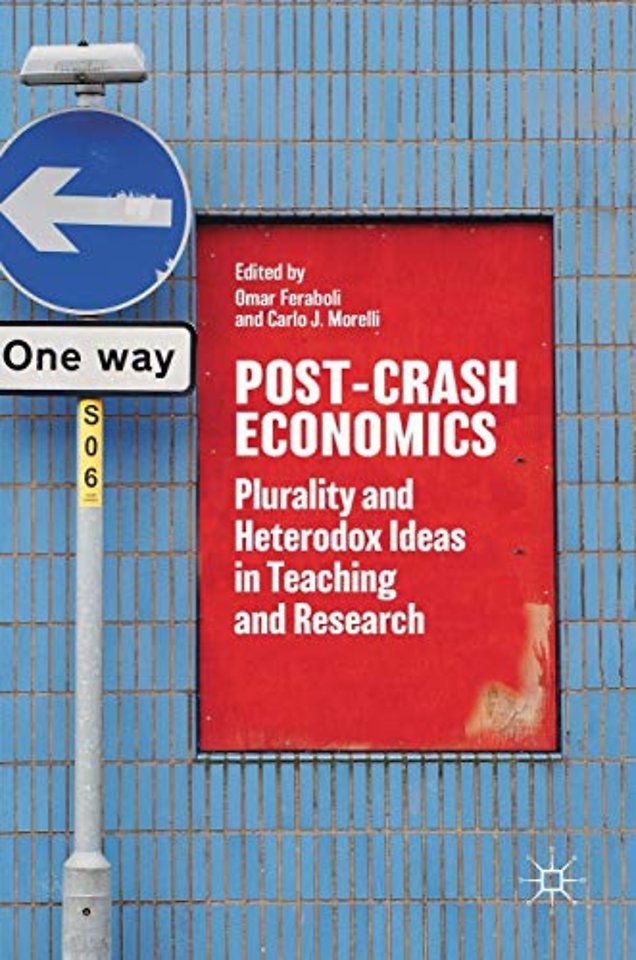
Post-Crash Economics

Plurality and Heterodox Ideas in Teaching and Research

Specificaties
Gebonden, blz. | Engels
Springer International Publishing | 2017
ISBN13: 9783319658544
Rubricering
Springer International Publishing e druk, 2017 9783319658544
€ 127,74
Levertijd ongeveer 9 werkdagen
Gratis verzonden

Samenvatting

This book demonstrates the continuing relevance of economics for understanding the world, through a restatement of the importance of plurality and heterodox ideas for teaching and research. The Great Financial Crash of 2007–8 gave rise to a widespread critique of economics for its inability to explain the most significant economic event since the 1930s. The current straightjacket of neo-classical undergraduate economic teaching and research hinders students’ understanding of the world they live in. The chapters in this book provide examples to demonstrate the importance of pluralistic and heterodox ideas from across the breadth of economics. The authors’ plurality of approach is indicative of the fact that economics is a much broader discipline than the dominant neo-classical orthodoxy would suggest. This volume provides undergraduate students with a range of alternative ideas and university lecturers with examples whereby the curricula have been broadened to include pluralist and heterodox ideas.

Specificaties

ISBN13:9783319658544
Taal:Engels
Bindwijze:gebonden
Uitgever:Springer International Publishing

Inhoudsopgave

<p>Chapter 1. Introduction: The Financial Crash and Post-Crash Economics.- Chapter 2. Student Reflections and Post-Crash Economics.- Part I. Problems in Business Economics.- Chapter 3. Business Strategy, Economic Crisis and the Theory of the Firm.- Chapter 4. History of Contemporary Economic Thought: Radical Economics, Marxist Economics and Marx’s Economics.- Part II. Problems in Micro Economics.- Chapter 5. Applying Principles of Action Learning in Undergraduate Economics.- Chapter 6. Conceptual Fossils: Why do we Keep Teaching Irrelevant Ideas in First Year Economics?.- Chapter 7. The Present State of Economics: Errors and Omissions Excepted.- Chapter 8. Teaching with Historical Perspectives: The Case of Development Economics.- Part III. Problems in Financial Economics.- Chapter 9. Teaching Reciprocity as the Foundation of Financial Economics.- Chapter 10. A Critical Approach to Teaching Financial Economics.</p>
€ 127,74
Levertijd ongeveer 9 werkdagen
Gratis verzonden

Rubrieken

    Personen

      Trefwoorden

        Post-Crash Economics