George Graham,
Shirley Ann Holt/Hale,
Melissa Parker
McGraw-Hill Education
11e druk, 2025
9781266254147
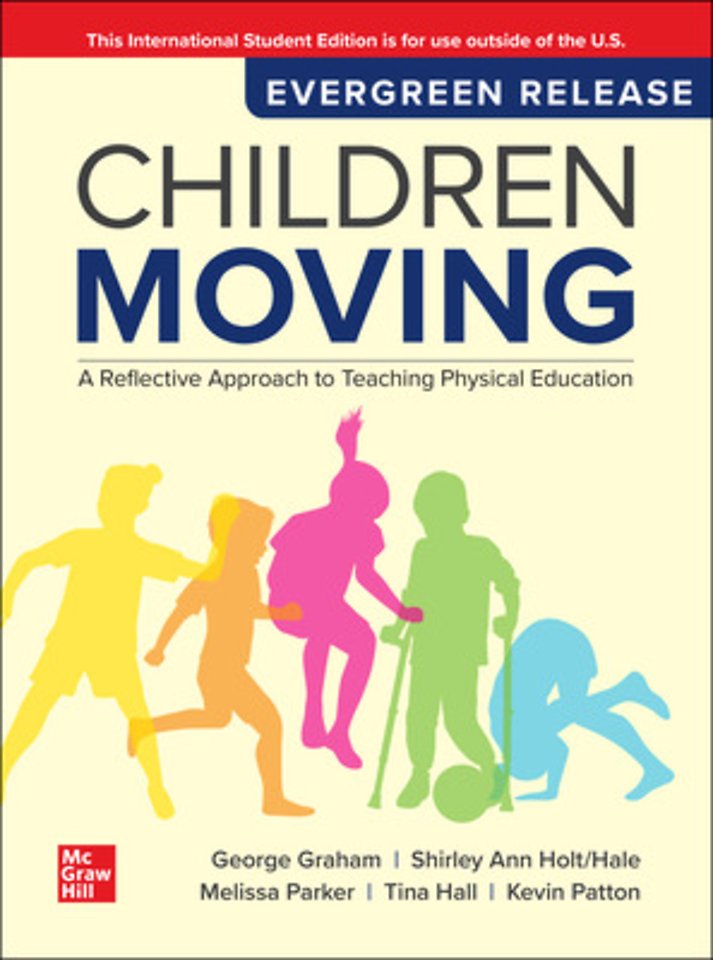
Children Moving: A Reflective Approach to Teaching Physical Education: 2025 Release ISE
Specificaties
Paperback, blz.
|
Engels
McGraw-Hill Education |
11e druk, 2025
ISBN13: 9781266254147
Rubricering
Levertijd ongeveer 11 werkdagen
Gratis verzonden
Samenvatting
Children Moving introduces a process of teaching that supports adapting, adjusting, and modifying lessons to be interesting and worthwhile for all children - from the lowest to the highest skill and fitness levels. The ultimate goal is to teach emerging instructors how to guide young people to become physically active for a lifetime. Rather than simply describing games and activities, Children Moving emphasizes the importance of children learning to move by focusing on developmentally appropriate skill themes that are used in virtually all sports and physical activities. The intended result is children becoming skillful movers and eager participants in physical activity.
Specificaties
Inhoudsopgave
<p>Part One: Introduction and Content Overview</p><p>1 The Value and Purpose of Physical Education for Children</p><p>2 The Skill Theme Approach</p><p>3 Skill Themes, Movement Concepts, and the National Standards</p><p>Part Two: Becoming a Reflective Teacher</p><p>4 Reflective Teaching</p><p>5 Determining Generic Levels of Skill Proficiency</p><p>6 Planning and Developing the Content</p><p>Part 3: Active Teaching Skills</p><p>7 Establishing an Environment for Learning</p><p>8 Maintaining Appropriate Behavior</p><p>9 Instructional Approaches</p><p>10 Adapting the Content for Diverse Learners</p><p>11 Observing Student Responses</p><p>12 Assessing Student Learning</p><p>13 Analyzing Reflective Teaching</p><p>Part Four: Movement Concepts Development</p><p>14 Space Awareness</p><p>15 Effort</p><p>16 Relationships</p><p>Part Five: Skill Theme Development</p><p>17 Traveling</p><p>18 Chasing, Fleeing, and Dodging</p><p>19 Bending, Stretching, Curling, and Twisting</p><p>20 Jumping and Landing</p><p>21 Balancing</p><p>22 Transferring Weight and Rolling</p><p>23 Kicking and Punting</p><p>24 Throwing and Catching</p><p>25 Volleying and Dribbling</p><p>26 Striking with Rackets and Paddles</p><p>27 Striking with Long-Handled Implements</p><p>Part Six: Skill Theme Application</p><p>28 Teaching Physical Fitness, Physical Activity, and Wellness</p><p>29 Teaching Educational Dance</p><p>30 Teaching Educational Gymnastics</p><p>31 Teaching Educational Games</p><p>32 Integrating the Skill Theme Approach Across the Curriculum</p><p>Part Seven: The Future</p><p>33 Building Support for Your Program</p><p>34 Physical Education for Tomorrow's Children</p>