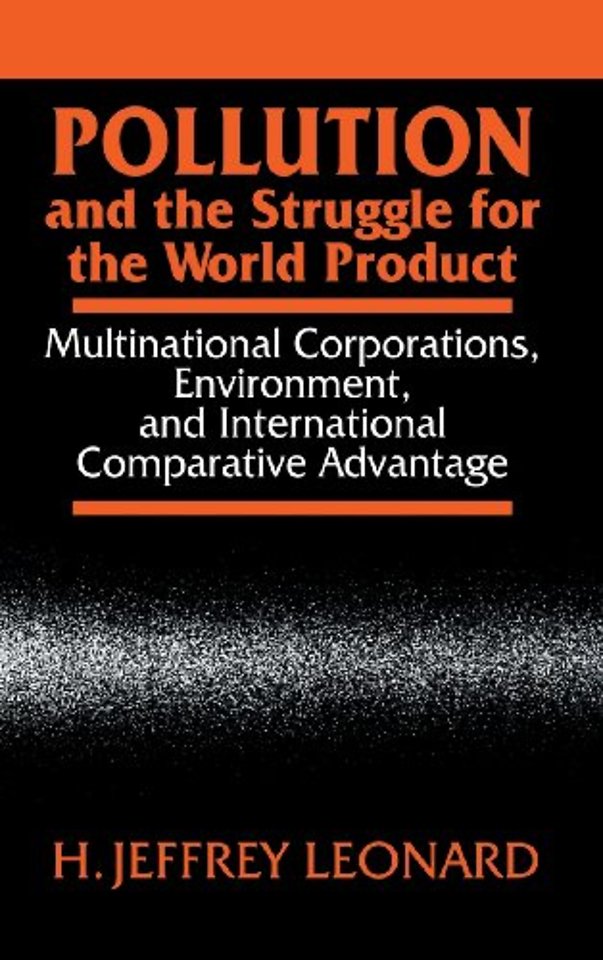
Pollution and the Struggle for the World Product

Multinational Corporations, Environment, and International Comparative Advantage

Specificaties
Gebonden, 268 blz. | Engels
Cambridge University Press | 1988
ISBN13: 9780521340427
Rubricering
Cambridge University Press e druk, 1988 9780521340427
€ 110,06
Levertijd ongeveer 9 werkdagen
Gratis verzonden

Samenvatting

Since the early 1970s, observers have noted that complying with environmental regulations might be a significant new factor in determining the locations of industries involved in world trade. Two related hypotheses have been offered to explain how environmental regulations are altering international comparative advantage in industrial production: first, that stringent regulations push industries out of the United States and other advanced industrial nations (the 'industrial flight' hypothesis); second, that less developed countries compete to attract multinational industries by minimizing their own regulations (the 'pollution haven' hypothesis). This 1988 study examines the validity of the industrial-flight and pollution-haven hypotheses within a broad political and economic framework of theories purporting to explain international trade and investment.

Specificaties

ISBN13:9780521340427
Taal:Engels
Bindwijze:Gebonden
Aantal pagina's:268

Inhoudsopgave

List of tables; Preface; Introduction; 1. The dynamics of international trade and industrial location; 2. Industrial-development strategy and the role of multinational corporations; 3. Pollution and comparative advantage in industrial production; 4. Environmental regulations and the industrial-flight hypothesis; 5. Pollution and industrial strategy in four rapidly industrializing countries; 6. Bargaining for the right to pollute; 7. The politics of pollution and multinational corporations in rapidly industrializing countries; 8. Theoretical implications and policy recommendations; Index.
€ 110,06
Levertijd ongeveer 9 werkdagen
Gratis verzonden

Rubrieken

    Personen

      Trefwoorden

        Pollution and the Struggle for the World Product