, ,

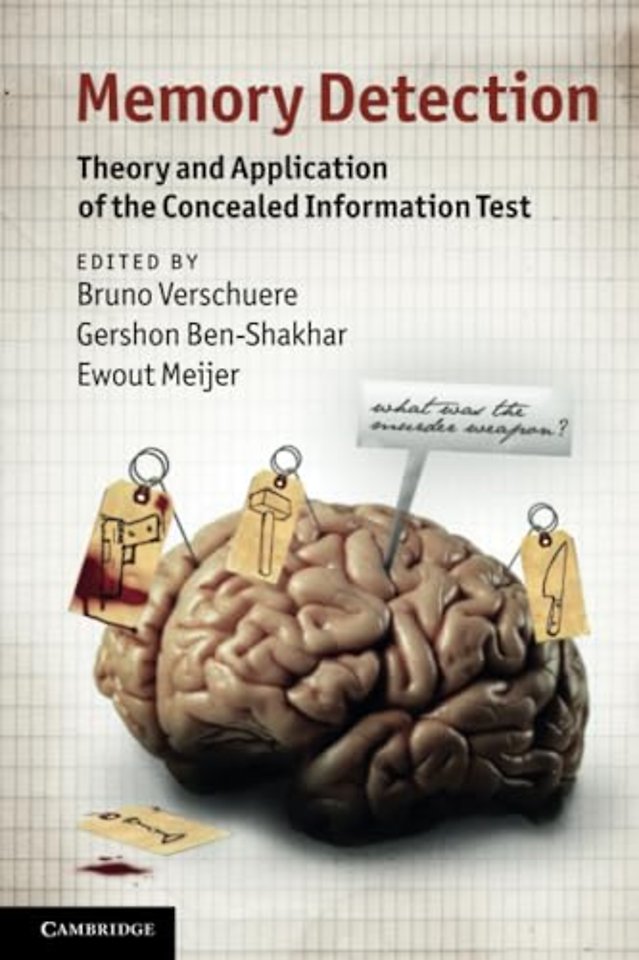
Memory Detection

Theory and Application of the Concealed Information Test

Specificaties
Paperback, 338 blz. | Engels
Cambridge University Press | 2011
ISBN13: 9780521136150
Rubricering
Hoofdrubriek : Mens en maatschappij
Cambridge University Press e druk, 2011 9780521136150
€ 35,55
Levertijd ongeveer 9 werkdagen
Gratis verzonden

Samenvatting

Traditional techniques for detecting deception, such as the 'lie-detector test' (or polygraph), are based upon the idea that lying is associated with stress. However, it is possible that people telling the truth will experience stress, whereas not all liars will. Because of this, the validity of such methods is questionable. As an alternative, a knowledge-based approach known as the 'Concealed Information Test' has been developed which investigates whether the examinee recognizes secret information - for example a crime suspect recognizing critical crime details that only the culprit could know. The Concealed Information Test has been supported by decades of research, and is used widely in Japan. This is the first book to focus on this exciting approach and will be of interest to law enforcement agencies and academics and professionals in psychology, criminology, policing and law.

Specificaties

ISBN13:9780521136150
Taal:Engels
Bindwijze:paperback
Aantal pagina's:338
Verschijningsdatum:24-2-2011

Inhoudsopgave

Part I. Introduction: Introduction. Science on the rise: birth and development of the Concealed Information Test Christopher J. Patrick; 1. Encouraging the use of the Guilty Knowledge Test (GKT): what the GKT has to offer law enforcement William G. Iacono; Part II. The Laboratory: Theoretical and Empirical Foundations of the Concealed Information Test: 2. Detecting concealed information using autonomic measures Matthias Gamer; 3. Detecting concealed information in less than a second: response latency-based measures Bruno Verschuere and Jan De Houwer; 4. P300 in detecting concealed information J. Peter Rosenfeld; 5. Detecting of deception and concealed information using neuroimaging techniques Matthias Gamer; 6. New and old covert measures in the Concealed Information Test Eitan Elaad; 7. Theory of the Concealed Information Test Bruno Verschuere and Gershon Ben-Shakhar; Part III. Field Applications of Concealed Information Detection: Promises and Perils: 8. Limitations of the Concealed Information Test in criminal cases Donald J. Kraphol; 9. Validity of the Concealed Information Test in realistic contexts Eitan Elaad; 10. Leakage of information to innocent suspects M. T. Bradley, Clair A. Barefoot and Andrea M. Arsenault; 11. Countermeasures Gershon Ben-Shakhar; 12. Psychopathy and the detection of concealed information Bruno Verschuere; 13. Clinical applications of the Concealed Information Test John J. B. Allen; 14. Daily application of the Concealed Information Test: Japan Akemi Osugi; 15. The Concealed Information Test in the courtroom: legal aspects Gershon Ben-Shakhar and Mordechai Kremnitzer; Part IV. Conclusions: 16. Practical guidelines for developing a Concealed Information Test Ewout Meijer, Bruno Verschuere and Gershon Ben-Shakhar; Epilogue Gershon Ben-Shakhar, Bruno Verschuere and Ewout Meijer.
€ 35,55
Levertijd ongeveer 9 werkdagen
Gratis verzonden

Rubrieken

    Personen

      Trefwoorden

        Memory Detection