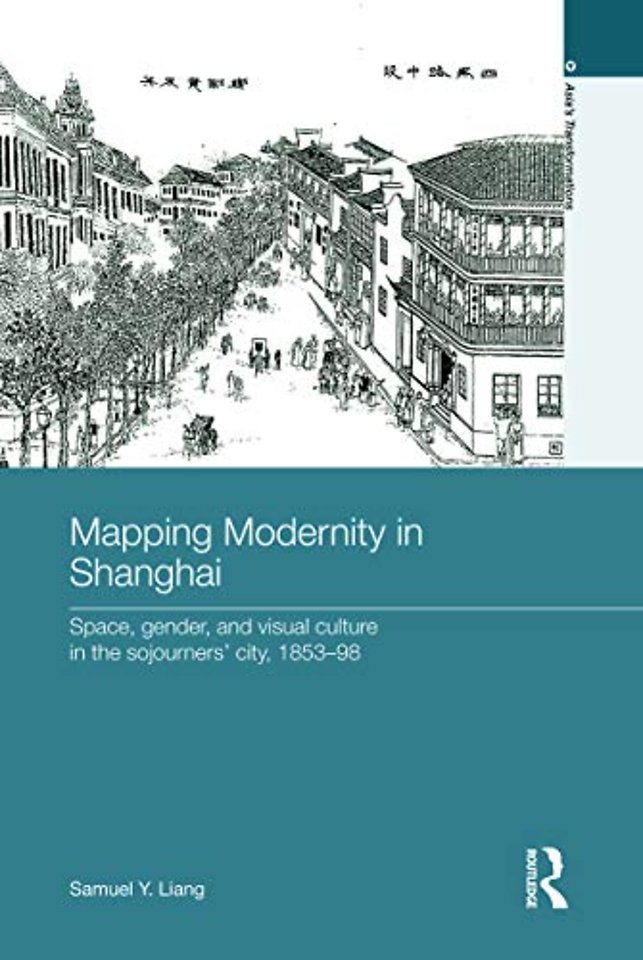
Mapping Modernity in Shanghai
Space, Gender, and Visual Culture in the Sojourners' City, 1853-98
Samenvatting
This book argues that modernity first arrived in late nineteenth-century Shanghai via a new spatial configuration. This city’s colonial capitalist development ruptured the traditional configuration of self-contained households, towns, and natural landscapes in a continuous spread, producing a new set of fragmented as well as fluid spaces. In this process, Chinese sojourners actively appropriated new concepts and technology rather than passively responding to Western influences. Liang maps the spatial and material existence of these transient people and reconstructs a cultural geography that spreads from the interior to the neighbourhood and public spaces.
In this book the author:
discusses the courtesan house as a surrogate home and analyzes its business, gender, and material configurations;
examines a new type of residential neighbourhood and shows how its innovative spatial arrangements transformed the traditional social order and hierarchy;
surveys a range of public spaces and highlights the mythic perceptions of industrial marvels, the adaptations of colonial spatial types, the emergence of an urban public, and the spatial fluidity between elites and masses.
Through reading contemporaneous literary and visual sources, the book charts a hybrid modern development that stands in contrast to the positivist conception of modern progress. As such it will be a provocative read for scholars of Chinese cultural and architectural history.