Alexander Birbrair
Elsevier Science
e druk, 2022
9780323998925
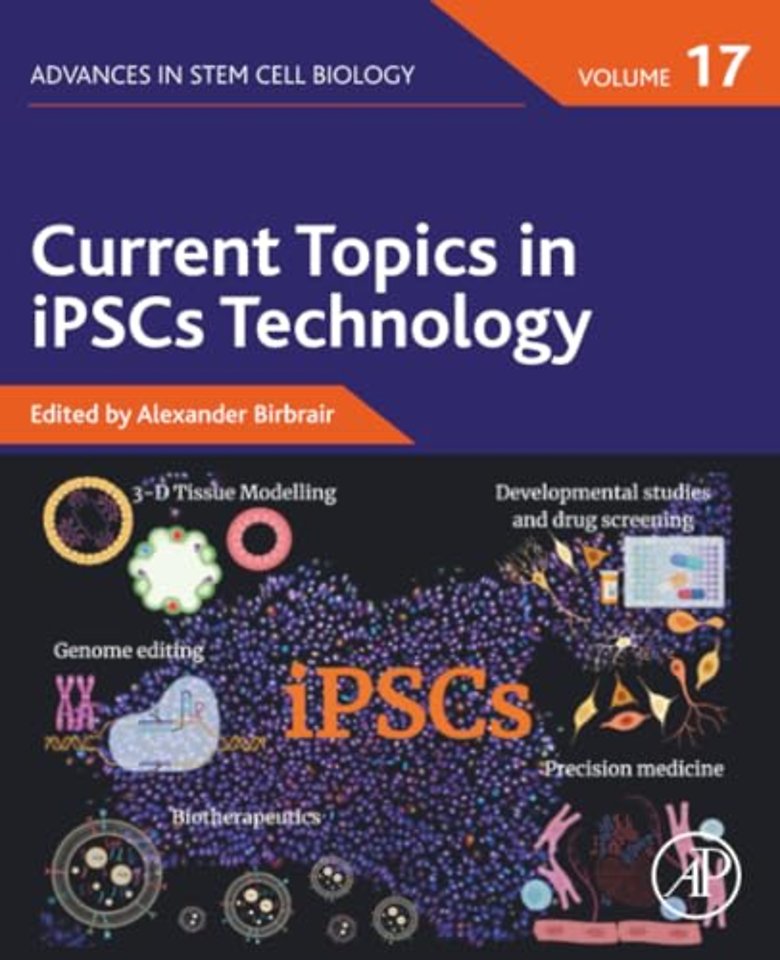
Current Topics in iPSCs Technology
Specificaties
Paperback, blz.
|
Engels
Elsevier Science |
2022
ISBN13: 9780323998925
Rubricering
Onderdeel van serie
Advances in Stem Cell Biology
Levertijd ongeveer 9 werkdagen
Gratis verzonden
Samenvatting
Current Topics in iPSCs provides a deep analysis of the underlying fundamentals that support short and mid-term developments and milestones in the business of mesenchymal stem cell therapies. This volume explores the next frontier of MSC therapies and how the transformational potential of therapeutic adult cells will be realised in all therapy areas. The impacts of clinical and economic benefits are dissected throughout each of the chapters. Written by thought leaders in the field for those curious about the interface of science and business.
Specificaties
Inhoudsopgave
<p>1. Regulatory and Policy Considerations in iPSC Research<br>2. HiPSCs for Population Genetics<br>3. Using Human Induced Pluripotent Stem Cells to Advance Personalized/Precision Medicine<br>4. hiPSC disease modeling with 3D organoids: Bioengineering perspective<br>5. The Differentiation of Embryonic Stem Cells and Induced Pluripotent Stem Cells into Airway and Alveolar Epithelial Cells<br>6. Transplantation of iPSC-derived human kidney organoids<br>7. An update on clinical applications of iPSCs from a genomic point of view<br>8. DNA Damage and Replication in Induced Pluripotent Stem Cells <br>9. Epigenetic modifications in induced pluripotent stem cells to boost myogenic commitment <br>10. Applications for Induced Pluripotent Stem Cells (iPSC) in Reproductive Medicine<br>11. iPSCs in Insulin Resistance, Type 2 Diabetes and the Metabolic Syndrome<br>12. Induced pluripotent stem cells for cystic fibrosis<br>13. Exploring 15q13.3 Copy Number Variants in iPSCs <br>14. Human induced pluripotent stem cells for modeling Brugada syndrome<br>15. iPSCs for Erythromycin Arrhythmogenicity Testing<br>16. Therapeutic Potential of Induced Pluripotent Stem Cell derived Extracellular Vesicles: Quo Vadis? Terra Incognito<br>17. Proteomic Approach for Creation of the Protein Marker Panels to Control for Quality of Human Induced Pluripotent Stem Cells (hiPSCs)<br>18. Application of induced pluripotent stem cells in tissue engineering <br>19. Application of iPSC-derived secretome in regenerative medicine <br>20. iPSCs and toxicology: predictive tool for present and future <br>21. Rejuvenation through iPSCs and reprogramming in vivo and in vitro</p>