Laura Joyce,
Henry Sutton
Springer International Publishing
e druk, 2018
9783030098841
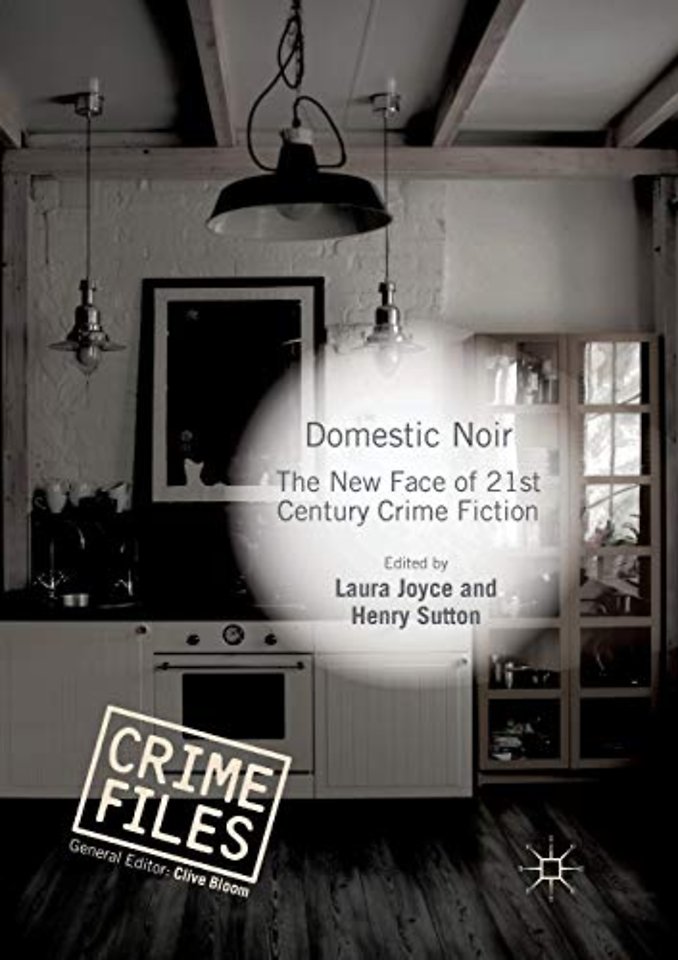
Domestic Noir
The New Face of 21st Century Crime Fiction
Specificaties
Paperback, blz.
|
Engels
Springer International Publishing |
2018
ISBN13: 9783030098841
Rubricering
Onderdeel van serie
Crime Files
Levertijd ongeveer 9 werkdagen
Gratis verzonden
Samenvatting
This book represents the first serious consideration of the 'domestic noir' phenomenon and, by extension, the psychological thriller. The only such landmark collection since Lee Horsley's The Noir Thriller, it extends the argument for serious, academic study of crime fiction, particularly in relation to gender, domestic violence, social and political awareness, psychological acuity, and structural and narratological inventiveness. As well as this, it shifts the debate around the sub-genre firmly up to date and brings together a range of global voices to dissect and situate the notion of 'domestic noir'. This book is essential reading for students, scholars, and fans of the psychological thriller.
Specificaties
ISBN13:9783030098841
Taal:Engels
Bindwijze:paperback
Uitgever:Springer International Publishing
Serie:Crime Files
Inhoudsopgave
<div>1 Introduction to Domestic Noir Laura Joyce.- Part I The Origins of Domestic Noir .- 2 The Literary Antecedents of Domestic Noir Fiona Peters.- 3 Hollywood and the Trailblazers of Domestic Noir:</div><div>The Case of Vera Caspary’s Laura (1943) Stefania Ciocia.- Part II The Influences of Gillian Flynn’s Gone Girl .- 4 Gone Genre: How The Academy Came Running And Discovered Nothing Was As It Seemed Henry Sutton.- 5 From Cool Girl to Dead Girl: Gone Girl and the Allure of Female Victimhood </div><div>Eva Burke.- Part III Gendered, Sexual, and Intimate Violence in Domestic</div><div>Noir .- 6 “How Much Do You Want to Pay for This Beauty?” Domestic Noir and the Active Turn in Feminist Crime Fiction Emma V. Miller.- 7 Teenage Kicks: Performance and Postfeminism</div><div>in Domestic Noir Leigh Redhead.- 8 The Violent Mother in Fact and Fiction Nicoletta Di Ciolla and Anna Pasolini.- Part IV Home as a Site of Violence .- 9 “[T]he People that Should Have Lived Here”: Haunting,the Economy, and Home in Tana French’s Broken Harbour Shelley Ingram and Willow G. Mullins.- 10 The Subversion of the Male Tradition in Crime Fiction: Liane Moriarty’s Little Lies </div><div>Elena Avanzas Álvarez.- 11 Domestic Noir and the US Cozy as Responses</div><div>to the Threatened Home Diane Waters and Heather Worthington.- 12 The House and the Hallucination in Tana French’s New Irish Gothic Rosemary Erickson Johnsen</div><div>13 Crime, the Domestic, and Social Commentary in Pierre Lemaitre’s Thriller Andrea Hynynen.- 14 Carmen’s Final Problem: Contesting Crime Fiction and Gender Roles in Marcela Serrano’s Nuestra Señora de la Soledad Patricia Catoira</div>