,

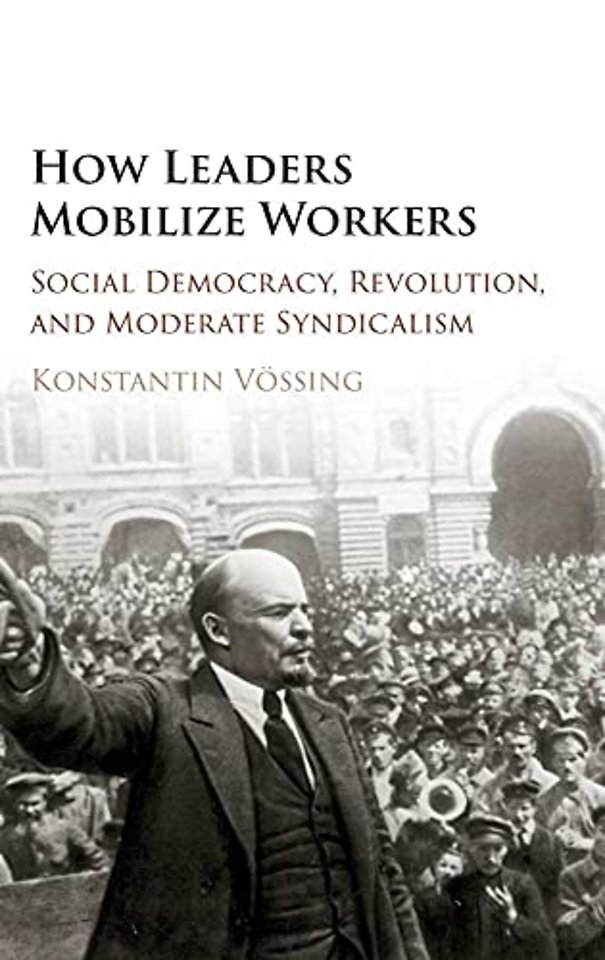
How Leaders Mobilize Workers

Social Democracy, Revolution, and Moderate Syndicalism

Specificaties
Gebonden, 320 blz. | Engels
Cambridge University Press | 2017
ISBN13: 9781107165175
Rubricering
Cambridge University Press e druk, 2017 9781107165175
€ 83,08
Levertijd ongeveer 9 werkdagen
Gratis verzonden

Samenvatting

This book explains why leaders choose social democracy, revolution, or moderate syndicalism to mobilize workers, and why it matters. In some countries, leaders have responded effectively to their political environment, while others have made ill-fitting choices. Vössing explains not only why leaders make certain choices, but also how their choices affect the success of interest mobilization and subsequent political development. Using quantitative data and historical sources, this book combines an analysis of the formation of class politics in all twenty industrialized countries between 1863 and 1919 with a general theory of political mobilization. It integrates economic, political, and ideational factors into a comprehensive account that highlights the critical role of individual leaders.

Specificaties

ISBN13:9781107165175
Taal:Engels
Bindwijze:Gebonden
Aantal pagina's:320

Inhoudsopgave

1. Introduction: a theory of national variation in interest mobilization; 2. Outcomes: dominant models of class politics and institutionalization success; 3. Environments: national differences in labor inclusion; 4. Agency: constraints, choice alternatives, and decision-making; 5. Choices: explaining variation in dominant models of class politics; 6. Consequences: explaining differences in institutionalization success; 7. Conclusion: causes and consequences of variation in interest mobilization.
€ 83,08
Levertijd ongeveer 9 werkdagen
Gratis verzonden

Rubrieken

    Personen

      Trefwoorden

        How Leaders Mobilize Workers