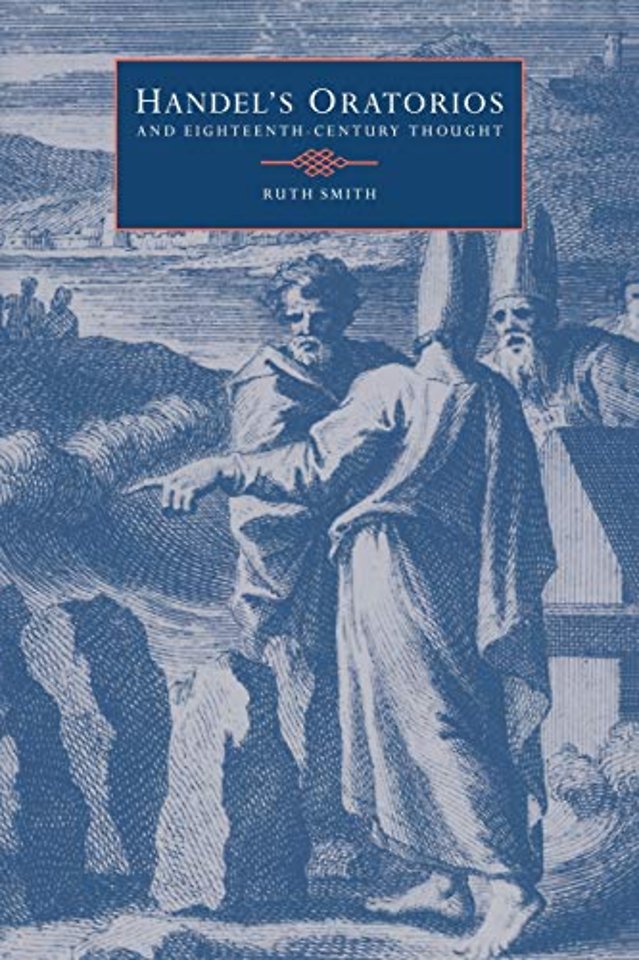
Handel's Oratorios and Eighteenth-Century Thought

Specificaties
Paperback, 500 blz. | Engels
Cambridge University Press | 2005
ISBN13: 9780521023702
Rubricering
Cambridge University Press e druk, 2005 9780521023702
€ 71,18
Levertijd ongeveer 9 werkdagen
Gratis verzonden

Samenvatting

In this wide-ranging and challenging book, Ruth Smith shows that the words to Handel's oratorios reflect the events and ideas of their time and have far greater meaning than has hitherto been realized. She explores literature, music, aesthetics, politics and religion to reveal Handel's works as conduits for eighteenth-century thought and sensibility. She provides a full picure of Handel's librettists and shows how their oratorio texts express key moral-political preoccupations and engage with contemporary ideological debate. British identity, the need for national unity, the conduct of war, the role of government, the authority of the Bible, the purpose of literature, the effect of art - these and many more concerns are addressed in the librettos. The book thus enriches our understanding of Handel, his times, and the relationships between music and its intellectual contexts.

Specificaties

ISBN13:9780521023702
Taal:Engels
Bindwijze:Paperback
Aantal pagina's:500

Inhoudsopgave

Introduction; Part I. English Origins of English Oratario: 1. Artistic norms; 2. The purpose of art; 3. Music, morals and religion; 4. The biblical sublime; 5. The survival of the epic; 6. The defence of Christianity; 7. Towards oratorio; Part II. The Patriot Libretto from the Excise Bill to the Jew Bill: Israelite Oratarios and English Politics: 8. Political events and political thought; 9. Allegorical politics; 10. Moral politics; 11. Esther to Athalia; 12. In time of war; 13. Images of government; 14. The conflict of public and private interests; 15. Coda: the end of Handel's Israelite oratorios; Appendices; Notes; Index.
€ 71,18
Levertijd ongeveer 9 werkdagen
Gratis verzonden

Rubrieken

    Personen

      Trefwoorden

        Handel's Oratorios and Eighteenth-Century Thought