, ,

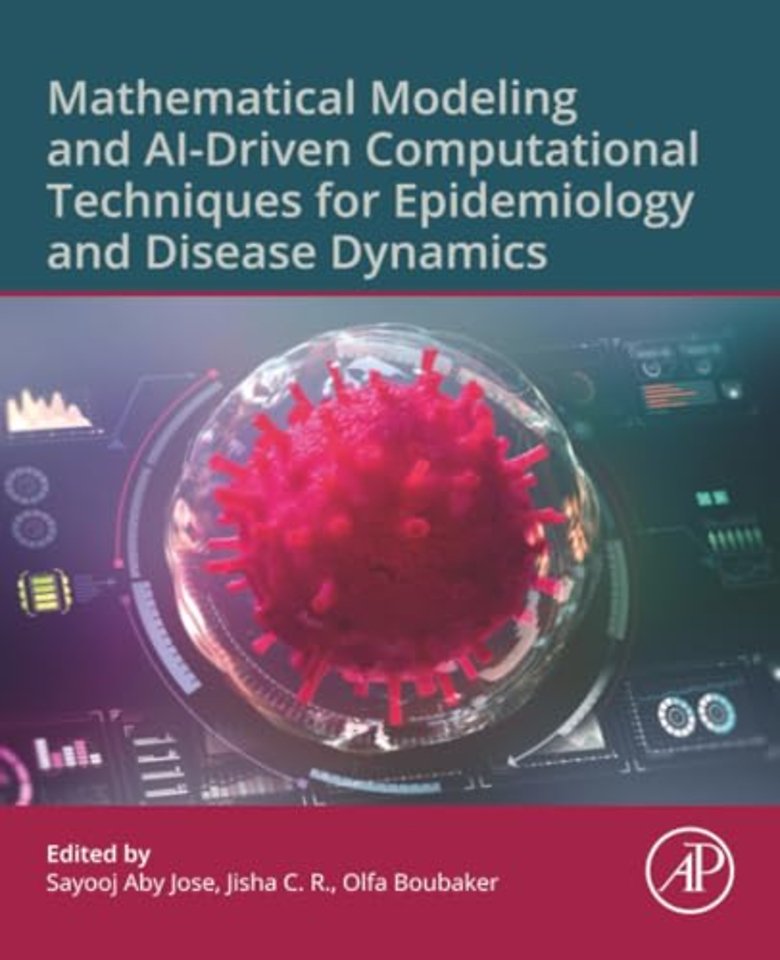
Mathematical Modeling and AI-Driven Computational Techniques for Epidemiology and Disease Dynamics

Specificaties
Paperback, blz. | Engels
Elsevier Science | 2026
ISBN13: 9780443332340
Rubricering
Elsevier Science e druk, 2026 9780443332340
€ 201,39
Levertijd ongeveer 9 werkdagen
Gratis verzonden

Samenvatting

Mathematical Modeling and AI-Driven Computational Techniques for Epidemiology and Disease Dynamics offers a comprehensive exploration of innovative methodologies at the intersection of mathematics, biology, and medicine. This book delves into advanced mathematical modeling, artificial intelligence, and computational intelligence, providing essential tools for understanding and managing complex disease dynamics. Covering a wide range of topics, including fractional-order modeling, optimal control strategies, and privacy-preserving technologies, it addresses critical challenges in public health and healthcare systems. With contributions from leading experts, this volume bridges theoretical advancements and practical applications, making it an invaluable resource for researchers, healthcare professionals, and academics seeking interdisciplinary solutions to global health issues.

Specificaties

ISBN13:9780443332340
Taal:Engels
Bindwijze:Paperback

Inhoudsopgave

Part I: Classical and Fractional Approaches to Infectious Disease Modeling<br>1. Mathematical and AI-Based Approaches in Epidemiology: Foundations and Frontiers<br>2. Comparative Numerical Methods for Infectious Disease Dynamics: Application to SEIR-type Models<br>3. Fractional Order Modeling and Stability Analysis of Vector-Borne Diseases: Application to Japanese Encephalitis Transmission<br>4. Optimal Control of Infectious Diseases Using Fractional Calculus: Application to Dengue Control via Atangana–Baleanu Model<br><br>Part II: Artificial Intelligence and Advanced Modeling in Epidemiology<br>5. Eco-Epidemiological Modeling with Memory Effects: Application to Fear, Quarantine, and Prey–Predator Interactions via Mittag-Leffler Kernel<br>6. Stochastic Analysis of Epidemic Models Under Random Perturbations: Application to SIR and SIRS Dual Epidemics<br>7. Deep Learning-Based Optimal Control Frameworks in Epidemiology: Application to Dengue Transmission Prediction and Control<br>8. AI-Driven Fractional Order Models for Emerging Viral Epidemics: Application to Oropouche Virus Outbreak Forecasting<br><br>Part III: Mathematical, Statistical, and AI-Based Models in Biomedicine and Healthcare<br>9. Explainable AI and Computational Intelligence in Healthcare: Application to Clinical Decision Support and Personalized Medicine<br>10. Soft Computing Models of Biological Tissue Dynamics: Application to Viscoelastic Behavior of Biological Tissues<br>11. Mathematical Modeling of Cancer Progression: Application to Ductal Carcinoma of the Breast<br>12. Modeling Immune Response and Antiviral Therapy Dynamics: Application to HBV Infection in Hepatic and Extrahepatic Sites<br>13. Statistical Modeling and Evaluation of Polyherbal Formulations: Application to Management of Diabetic Foot Ulcers<br>14. Conclusion | Prospects in computational epidemiology: challenges and emerging directions
€ 201,39
Levertijd ongeveer 9 werkdagen
Gratis verzonden

Rubrieken

    Personen

      Trefwoorden

        Mathematical Modeling and AI-Driven Computational Techniques for Epidemiology and Disease Dynamics