, ,

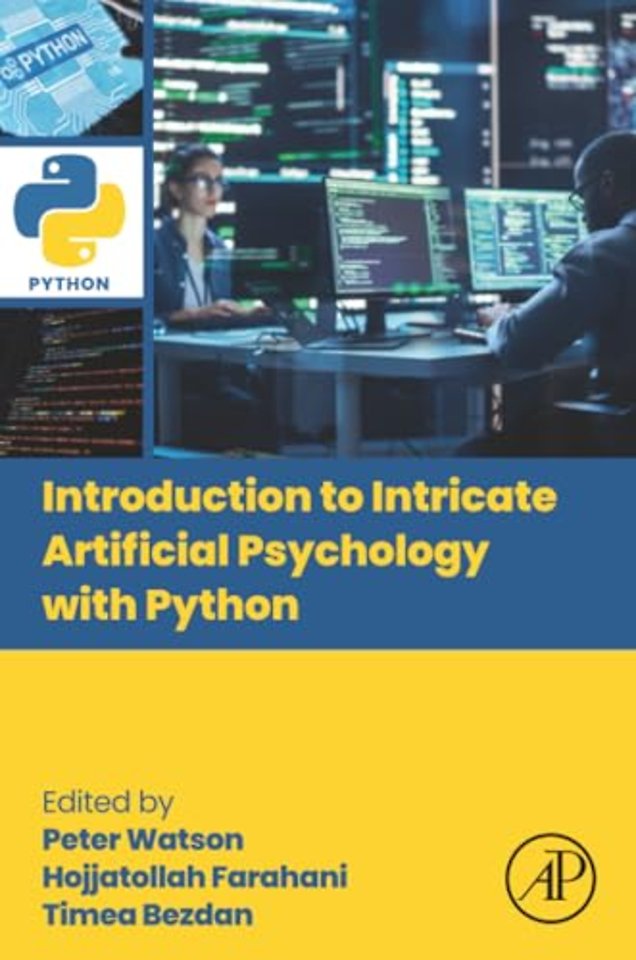
Introduction to Intricate Artificial Psychology with Python

Specificaties
Paperback, blz. | Engels
Elsevier Science | 2025
ISBN13: 9780443302480
Rubricering
Elsevier Science e druk, 2025 9780443302480
€ 185,79
Levertijd ongeveer 9 werkdagen
Gratis verzonden

Samenvatting

Introduction to Intricate Artificial Psychology with Python unlocks the mysteries of Intricate Artificial Psychology (iAp). This comprehensive guide takes readers through advanced cognitive frameworks and the complex landscape of artificial psychology using Python. Starting with an introduction to iAp, the book explores degrees of prediction and applies Fuzzy Cognitive Maps (IAP). Special focus is given to detecting implicit bias through a combination of Fuzzy Cognitive Maps and SHAP values, offering a unique perspective on artificial intelligence and psychological phenomena. The book covers forecasting in iAp, complex network analysis, and psychological graph analysis (Pga).

It delves into the intersection of deep learning and neuroimaging, as well as machine learning techniques in neuroimaging. It includes practical case studies, allowing readers to apply cutting-edge techniques to real-world psychological scenarios.

Specificaties

ISBN13:9780443302480
Taal:Engels
Bindwijze:Paperback

Inhoudsopgave

1. Introduction to intricate artificial psychology<br>2. Intricate mind: perception, cognition, and emotion are integrated in a new paradigm for a cognitive model<br>3. Toward intricate thinking<br>4. Prediction in intricate artificial psychology<br>5. Detecting implicit bias using fuzzy cognitive maps<br>6. Forecasting in complex artificial psychology<br>7. Explaining neural networks in natural language<br>8. Complex network analysis<br>9. Network approach in psychology<br>10. Deep learning techniques in neuroimaging<br>11. Machine learning techniques in neuroimaging<br>12. Becoming a PsychoPythonista
€ 185,79
Levertijd ongeveer 9 werkdagen
Gratis verzonden

Rubrieken

    Personen

      Trefwoorden

        Introduction to Intricate Artificial Psychology with Python