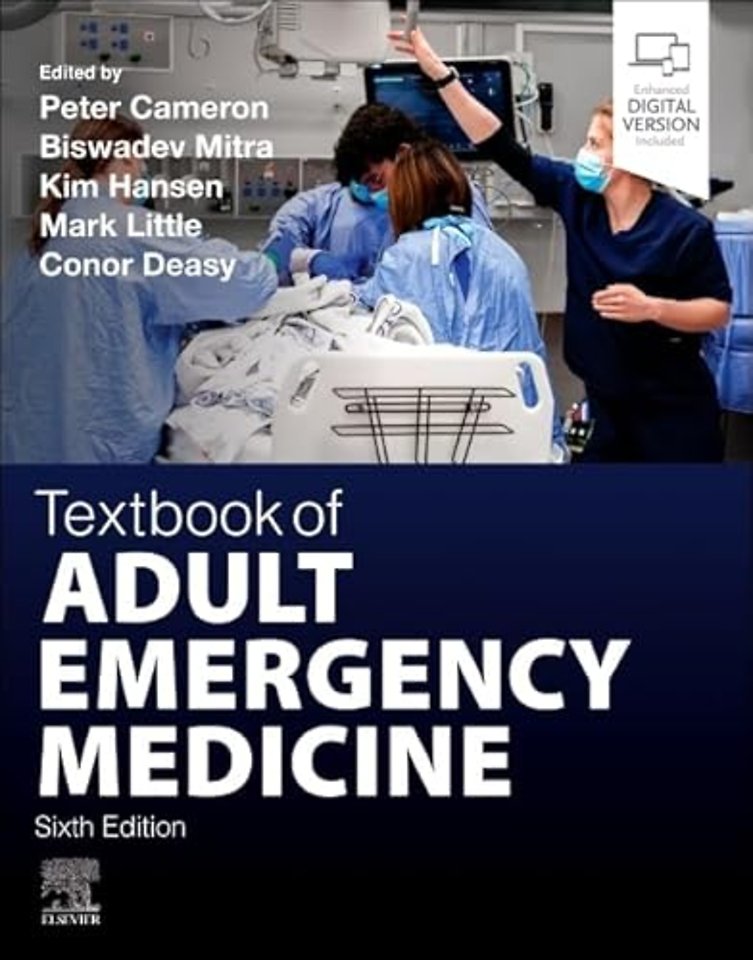
, , , , e.a.

Textbook of Adult Emergency Medicine

Specificaties
Paperback, blz. | Engels
Elsevier Health Sciences | 2025
ISBN13: 9780443248993
Rubricering
Elsevier Health Sciences e druk, 2025 9780443248993
€ 128,49
Levertijd ongeveer 9 werkdagen
Gratis verzonden

Samenvatting

The Sixth Edition of this well-known and authoritative textbook provides comprehensive, up-to-date coverage of Adult Emergency Medicine. It is an invaluable guide for trainees and other health professionals, including nurse specialists and paramedics, offering concise and practical guidance based on the latest best practices and evidence-based guidelines. Originally published over 25 years ago this title has been regularly updated to keep up with current practice.

All major topics encountered in the emergency department are covered and have been updated to reflect recent changes in this constantly evolving specialty. Chapters are concise and practical, with key points and controversial areas highlighted.

In addition, the textbook addresses complex topics such as death and dying, managing challenging patients, ethics, providing testimony, and domestic violence. It also covers governance, training, research, and organisational subjects like disaster planning and response, humanitarian emergencies, and refugee medicine. This content provides a framework for understanding the complexities of managing major emergency care systems.

This textbook remains a vital resource for anyone involved in the practice of emergency medicine.Practical guide– covers everything you are likely to come acrossClinically orientated and thoroughly updated by a team of expert editorsConcise and readable chapters – accessible for trainee doctors as well as emergency medicine nursing specialties and those working in urgent care unitsKey points and highlighted controversial areas support additional learningSupports image interpretation in emergency medicineNew to this edition Fully refreshed and updated to reflect the latest evidence and practiceNew content on resuscitation, critical care, trauma, cardiology, pandemic preparedness and infection control, emergency care in humanitarian crises, wellness, resilience, and performance in emergency medicineImages updated to reflect new technologyAdditional images available in the eBook

Specificaties

ISBN13:9780443248993
Taal:Engels
Bindwijze:Paperback

Inhoudsopgave

<p>Section 1 Resuscitation<br>1.1 Basic life support<br>1.2 Advanced life support<br>Section 2 Critical care<br>2.1 Airway and ventilation management<br>2.2 Oxygen therapy<br>2.3 Haemodynamic monitoring<br>2.4 Shock overview<br>2.5 Sepsis and septic shock<br>2.6 Arterial blood gases<br>2.7 Cerebral resuscitation after cardiac arrest<br>2.8 Anaphylaxis<br>Section 3 Trauma<br>3.1 Trauma overview<br>3.2 Traumatic brain injury<br>3.3 Spinal trauma<br>3.4 Facial trauma<br>3.5 Abdominal trauma<br>3.6 Chest trauma<br>3.7 Limb trauma<br>3.8 Radiology in major trauma<br>3.9 Trauma in pregnancy<br>3.10 Wound care and repair<br>3.11 Burns<br>3.12 Major haemorrhage<br>Section 4 Orthopaedic emergencies<br>4.1 Injuries of the shoulder<br>4.2 Dislocations of the elbow<br>4.3 Fractures of the humerus<br>4.4 Fractures of the forearm and carpal bones<br>4.5 Hand injuries<br>4.6 Pelvic injuries<br>4.7 Hip injuries<br>4.8 Femur injuries<br>4.9 Knee injuries<br>4.10 Tibial and fibular injuries<br>4.11 Ankle joint injuries<br>4.12 Foot injuries<br>4.13 Osteomyelitis<br>Section 5 Cardiovascular emergencies<br>5.1 Chest pain<br>5.2 Acute coronary syndromes<br>5.3 Assessment and management of acute pulmonary oedema<br>5.4 Arrhythmias<br>5.5 Pulmonary embolism<br>5.6 Pericarditis, cardiac tamponade and myocarditis<br>5.7 Heart valve emergencies<br>5.8 Peripheral vascular disease<br>5.9 Hypertension<br>5.10 Aortic dissection<br>5.11 Aneurysms<br>Section 6 Respiratory emergencies<br>6.1 Upper respiratory tract<br>6.2 Asthma<br>6.3 Community-acquired pneumonia<br>6.4 Influenza<br>6.5 Chronic obstructive pulmonary disease<br>6.6 Pneumothorax<br>6.7 Pleural effusion<br>6.8 Haemoptysis<br>Section 7 Digestive emergencies<br>7.1 Dysphagia<br>7.2 Approach to abdominal pain<br>7.3 Bowel obstruction<br>7.4 Hernia<br>7.5 Gastroenteritis<br>7.6 Haematemesis and melaena<br>7.7 Peptic ulcer disease and gastritis<br>7.8 Biliary tract disease<br>7.9 Acute pancreatitis<br>7.10 Acute appendicitis<br>7.11 Inflammatory bowel disease<br>7.12 Acute liver failure<br>7.13 Haematochezia<br>7.14 Perianal conditions<br>Section 8 Neurology emergencies<br>8.1 Headache<br>8.2 Stroke and transient ischaemic attacks<br>8.3 Subarachnoid haemorrhage<br>8.4 Altered conscious state<br>8.5 Seizures<br>8.6 Syncope and vertigo<br>8.7 Weakness<br>Section 9 Infectious disease emergencies<br>9.1 Approach to undifferentiated fever in adults<br>9.2 Meningitis<br>9.3 Septic arthritis<br>9.4 Urinary tract infections<br>9.5 Skin and soft-tissue infections<br>9.6 COVID-19<br>9.7 Needlestick injuries and related blood and body fluid exposures<br>9.8 Hepatitis<br>9.9 Human immunodeficiency virus and acquired immune deficiency syndrome<br>9.10 Sexually transmitted infections<br>9.11 Tropical infectious diseases<br>Section 10 Genitourinary emergencies<br>10.1 Acute kidney injury<br>10.2 The acute scrotum<br>10.3 Renal colic<br>Section 11 Endocrine emergencies<br>11.1 Diabetes mellitus and hypoglycaemia: an overview<br>11.2 Diabetic ketoacidosis and hyperosmolar, hyperglycaemic state<br>11.3 Thyroid and adrenal emergencies<br>Section 12 Metabolic emergencies<br>12.1 Acid–base disorders<br>12.2 Electrolyte disturbances<br>Section 13 Haematology emergencies<br>13.1 Anaemia<br>13.2 Neutropaenia<br>13.3 Thrombocytopaenia<br>13.4 Haemophilia<br>13.5 Blood and blood components<br>Section 14 Rheumatology and musculoskeletal emergencies<br>14.1 Rheumatological emergencies<br>14.2 Monoarthritis<br>14.3 Polyarthritis<br>14.4 Musculoskeletal and soft-tissue emergencies<br>Section 15 Dermatology emergencies<br>15.1 Emergency dermatology<br>Section 16 Ocular emergencies<br>16.1 Ocular emergencies<br>Section 17 Dental emergencies<br>17.1 Dental emergencies<br>Section 18 Ear, nose and throat emergencies<br>18.1 Ear, nose and throat emergencies<br>Section 19 Obstetrics and gynaecology emergencies<br>19.1 Pelvic pain<br>19.2 Pelvic inflammatory disease<br>19.3 Abnormal vaginal bleeding in the nonpregnant patient<br>19.4 Pain and bleeding in early pregnancy – miscarriage and ectopic pregnancy<br>19.5 Bleeding after the first trimester of pregnancy<br>19.6 Pre-eclampsia<br>19.7 Emergency birth and complications<br>Section 20 Psychiatric emergencies<br>20.1 Mental state assessment<br>20.2 Distinguishing medical from psychiatric causes of mental disorder presentations<br>20.3 Suicidality and self-harm<br>20.4 Depression<br>20.5 Psychosis<br>20.6 Pharmacological management of the aroused patient<br>Section 21 Challenging situations<br>21.1 Death and dying<br>21.2 Sexual assault<br>21.3 Family violence<br>21.4 Alcohol-related illness<br>21.5 The challenging patient<br>21.6 End-of-life decision-making and provision of palliative care<br>21.7 Organ and tissue donation<br>Section 22 Pain relief<br>22.1 General pain management<br>22.2 Local anaesthesia<br>22.3 Emergency department procedural sedation<br>Section 23 Emergency imaging<br>23.1 Emergency department ultrasound<br>23.2 Computed tomography scanning in emergency medicine<br>23.3 Magnetic resonance imaging in emergency medicine<br>Section 24 Environmental emergencies<br>24.1 Heat-related illness<br>24.2 Cold-related illness<br>24.3 Dysbarism<br>24.4 Radiation incidents<br>24.5 Drowning<br>24.6 Electric shock and lightning injury<br>24.7 High-altitude illness<br>Section 25 Toxicology emergencies<br>25.1 Approach to the poisoned patient<br>25.2 Cardiovascular drugs<br>25.3 Antipsychotic drugs<br>25.4 Antidepressant drugs<br>25.5 Lithium<br>25.6 Paracetamol<br>25.7 Salicylate<br>25.8 Antidiabetic drugs<br>25.9 Colchicine<br>25.10 Caffeine and theophylline<br>25.11 Iron<br>25.12 Drugs of abuse<br>25.13 Cyanide<br>25.14 Hydrofluoric acid<br>25.15 Anticholinesterase insecticides<br>25.16 Herbicides<br>25.17 Ethanol and other &lsquo;toxic&rsquo; alcohols<br>25.18 Carbon monoxide<br>25.19 Anticonvulsants<br>25.20 Toxidromes<br>25.21 Chloroquine<br>25.22 Opioids<br>25.23 Oral anticoagulants<br>Section 26 Toxinology emergencies<br>26.1 Snakebite<br>26.2 Exotic snakebite<br>26.3 Spider bite<br>26.4 Marine injury, envenomation and poisoning<br>26.5 Hymenoptera stings<br>Section 27 Academic emergency medicine<br>27.1 Research methodology<br>27.2 Writing for publication<br>27.3 Principles of medical education<br>27.4 Teaching medical students emergency medicine<br>27.5 Postgraduate emergency medicine teaching and simulation<br>Section 28 Emergency medicine and the law<br>28.1 Mental health and the law: the Australian and New Zealand perspectives<br>28.2 The coroner<br>28.3 Consent and competence<br>28.4 Privacy and confidentiality<br>28.5 Ethics in emergency medicine<br>Section 29 Emergency and medical systems<br>29.1 Prehospital emergency medicine<br>29.2 Retrieval<br>29.3 Medical issues in disasters<br>29.4 Triage<br>29.5 Emergency care in a humanitarian crisis<br>29.6 Emergency department short stay units<br>29.7 Overcrowding<br>29.8 Rapid and other hyperacute response systems in the emergency department<br>29.9 Public health and social emergency medicine<br>29.10 Indigenous health in the emergency department setting<br>Section 30 Administration<br>30.1 Emergency department staffing<br>30.2 Emergency department layout<br>30.3 Quality assurance and quality improvement<br>30.4 Business planning<br>30.5 Accreditation, specialist training and recognition in Australia and Aotearoa New Zealand<br>30.6 Specialist training and recognition in emergency medicine in the United Kingdom<br>30.7 Complaints<br>30.8 Patient safety<br>30.9 Wellness, resilience and performance in emergency medicine</p>
€ 128,49
Levertijd ongeveer 9 werkdagen
Gratis verzonden

Rubrieken

    Personen

      Trefwoorden

        Textbook of Adult Emergency Medicine