, ,

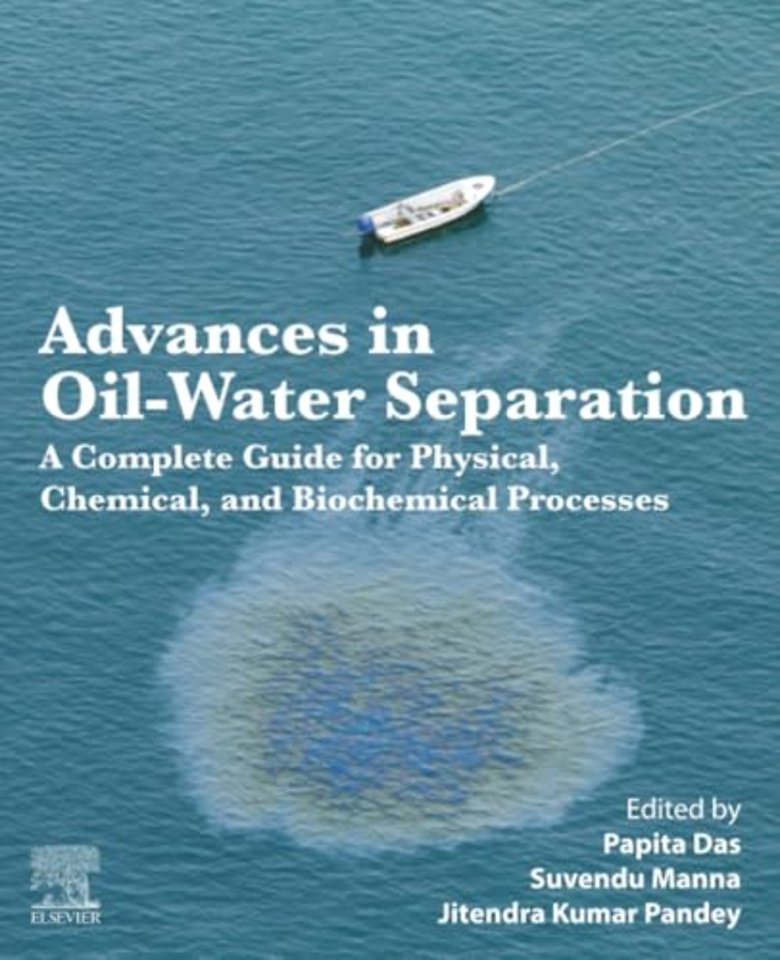
Advances in Oil-Water Separation

A Complete Guide for Physical, Chemical, and Biochemical Processes

Specificaties
Paperback, blz. | Engels
Elsevier Science | 2022
ISBN13: 9780323899789
Rubricering
Elsevier Science e druk, 2022 9780323899789
€ 241,00
Levertijd ongeveer 9 werkdagen
Gratis verzonden

Samenvatting

Advances in Oil-Water Separation: A Complete Guide for Physical, Chemical, and Biochemical Processes discusses a broad variety of chemical, physical and biochemical processes, including skimming, membrane separation, adsorption, onsite chemical reactions, burning and usage of suitable microbial strains for onsite degradation of oil. It critically reviews all current developments in oil-water separation processes and technologies, identifies gaps and illuminates the scope for future research and development in the field.  This book provides researchers, engineers and environmental professionals working in oil recovery and storage with solutions for disposal of waste oil and separation of oil from water in a sustainable, environmentally-friendly way.

As the book provides a complete state-of-art overview on oil-water separation technologies, it will also ease literature searches on oil-water separation technologies.

Specificaties

ISBN13:9780323899789
Taal:Engels
Bindwijze:Paperback

Inhoudsopgave

<p>Section A: Overview on oil pollution and its effect on environment<br>1. An overview of oil pollution and oil-spilling incidents<br>2. Spatio-temporal distribution of Oil spill effect in the estuarine terrain of Bhagirathi-Hooghly river, West Bengal, India<br>3. Oil pollution and municipal wastewater treatment: issues and impact<br>4. Overview on worldwide regulations on oil pollution control<br>5. Technological aspects of different oil and water separation advanced techniques<br>6. Impact analysis of oil pollution on environment, marine and soil communities<br>7. Impact of Oil Exploration and Spillage on Marine Environments</p> <p>Section B: Physical processes<br>8. Super-hydrophobic polymeric adsorbents as an efficient oil separator<br>9. Oil Spill Treatment Using Porous Materials<br>10. Nanotechnological advances for oil spill management: Removal, recovery and remediation<br>11. Carbon nanotube (CNT) based oil-water separation<br>12. Nanocoated membrane for oil treatment</p> <p>Section C: Thermo-chemical processes<br>13. Chemical Stabilisation of oil by elastomizers<br>14. Advances in burning processes and their impact to the environment<br>15. Use of chemical dispersants for management of oil pollution<br>16. Use of emulsifier as the agent for oil spill mitigation</p> <p>Section D: Biological processes<br>17. Use of live microbes for oil degradation in-situ<br>18. Metagenomics- An Approach for Selection of Oil Degrading Microbes and its Application in Remediation of Oil Pollution<br>19. Potentiality of Enzymes as a green tool in Degradation of Petroleum Hydrocarbons<br>20. Bioremediation: an ecofriendly approach for the treatment of oil spills<br>21. Bioremediation of black tides: Strategies involving genetically modified organisms<br>22. Microbes and marine oil spills: Oil-eating bugs can cure oily sea-sickness<br>23. Hybrid biological processes for the treatment of oily wastewater</p> <p>Section E: Miscellaneous<br>24. Efficient management of oil waste: Chemical and physiochemical approaches<br>25. Membrane bioreactors for the treatment of oily wastewater: pros and cons<br>26. Overview on natural materials for oil water separation<br>27. Extraction and separation of oils: the journey from distillation to pervaporation</p>
€ 241,00
Levertijd ongeveer 9 werkdagen
Gratis verzonden

Rubrieken

    Personen

      Trefwoorden

        Advances in Oil-Water Separation